IOCCG news bulletins include items of interest from the IOCCG, its sponsoring agencies, and the broader ocean colour radiometry (OCR) user community. To include items of interest in the next IOCCG news bulletin, contact Raisha Lovindeer (raisha@ioccg.org). See IOCCG on Bluesky and LinkedIn.
News from IOCCG
Statement from the IOCCG Chair on global coverage of hyperspectral ocean colour radiometry (OCR)
 The International Ocean Colour Coordinating Group (IOCCG) expresses our strong support for the continued development and expansion of satellite missions that yield global hyperspectral coverage of ocean colour data with revisit times on the order of 1-2 days or better. NASA has had a pioneering role with the launch of the Plankton, Aerosol, Cloud, and ocean Ecosystem (PACE) mission in 2024, the first global hyperspectral mission. The open data policy of IOCCG agencies has enabled these data to be used widely in many countries across the globe. New applications have included observations of an expanded range of phytoplankton functional types, with enhanced detection of harmful algal blooms, and advanced monitoring of ecosystem health, water quality, carbon pools, and changes in aquatic habitats, bathymetry and underwater visibility. Daily global hyperspectral coverage has empowered biogeochemical modelling, informed management decisions, and enabled rapid response to water hazards impacting human health and businesses like fisheries, aquaculture, and coastal development. These and other applications are outlined in IOCCG Report 22 (doi.org/10.25607/OBP-2062). IOCCG strongly supports the continuation and expansion of global coverage of hyperspectral OCR to adequately maintain long-term ocean science and management applications.
IOCS-2027 Save the Date
 Save the date for the 7th International Ocean Colour Science (IOCS) meeting, which will take place from 21 – 24 September 2027 in Hangzhou, China.
The IOCS meeting serves as a venue for the aquatic radiometry community to: openly communicate with the agencies that have an interest in ocean colour missions; and advance ocean-colour science to ensure the continuity and future of monitoring aquatic ecosystems. IOCS-2027 will focus on advancing existing recommendations that were put forward in previous years, and on new technologies, including the application of artificial intelligence to ocean-colour science. Associated short courses will be held on 20 September 2027.
The science meeting is convened by the IOCCG in partnership with the Chinese Ministry of Natural Resources, Second Institute of Oceanography and the Chinese OC community.
Subscribe to the IOCCG mailing list for future announcements about the IOCS meeting, including the call for breakout session proposals. Expressions of interest for associated training sessions or side meetings can be directed to raisha@ioccg.org.
Addendum added to IOCCG Protocol 3
 Fiducial Reference Measurements for Satellite Ocean Colour (FRM4SOC)-2 guidelines for field radiometer users and calibration experts are published by EUMETSAT. These guidelines are intended to complement the IOCCG Protocols for Satellite Ocean Colour Data Validation: In situ Optical Radiometry with detailed recommendations on several aspects of OC field radiometry, including:
- Measurement Procedure for Above-Water TriOS Radiometers
- Above-Water Field Radiometry and Data Handling for Ocean Colour Applications
- Guidelines for Individual OCR full Characterisation and Calibration
- Harmonised Calibration-Characterisation Lab Guidelines Including Lab Protocols for FRMOCnet OCR Models
- Requirements for Instrument Manufacturers Towards FRM Compliance
- Concise list of FRM requirements for OCR manufacturers
IOCCG Platt Scholarship: 2026 Report, Applications for 2027 extended to 30 November
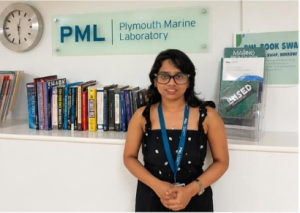
2026 IOCCG Platt Scholar B Goutami at Plymouth Marine Lab, UK, during her research exchange from July to September 2026. Click the image to read her scholar report, available at ioccg.org/what-we-do/training-and-education/ioccg-fellowship-recipients.
Applications for the 2027 IOCCG Platt Scholarship have been extended to 30 November 2026. The scholarship offers developing country nationals the opportunity to conduct hands-on research at a foreign institution OR receive in-depth training from an international training course. Applicants are required to identify their host institution or training course prior to making an application. Potential hosts are encouraged to share this opportunity with eligible scholars (citizens of these countries, who are residing in a listed country at the time of application). Check the scholarship page for details.
Recordings Available for Observing Marine Ecosystem Structure and Function: From Microbial Communities to Fisheries and Human Health
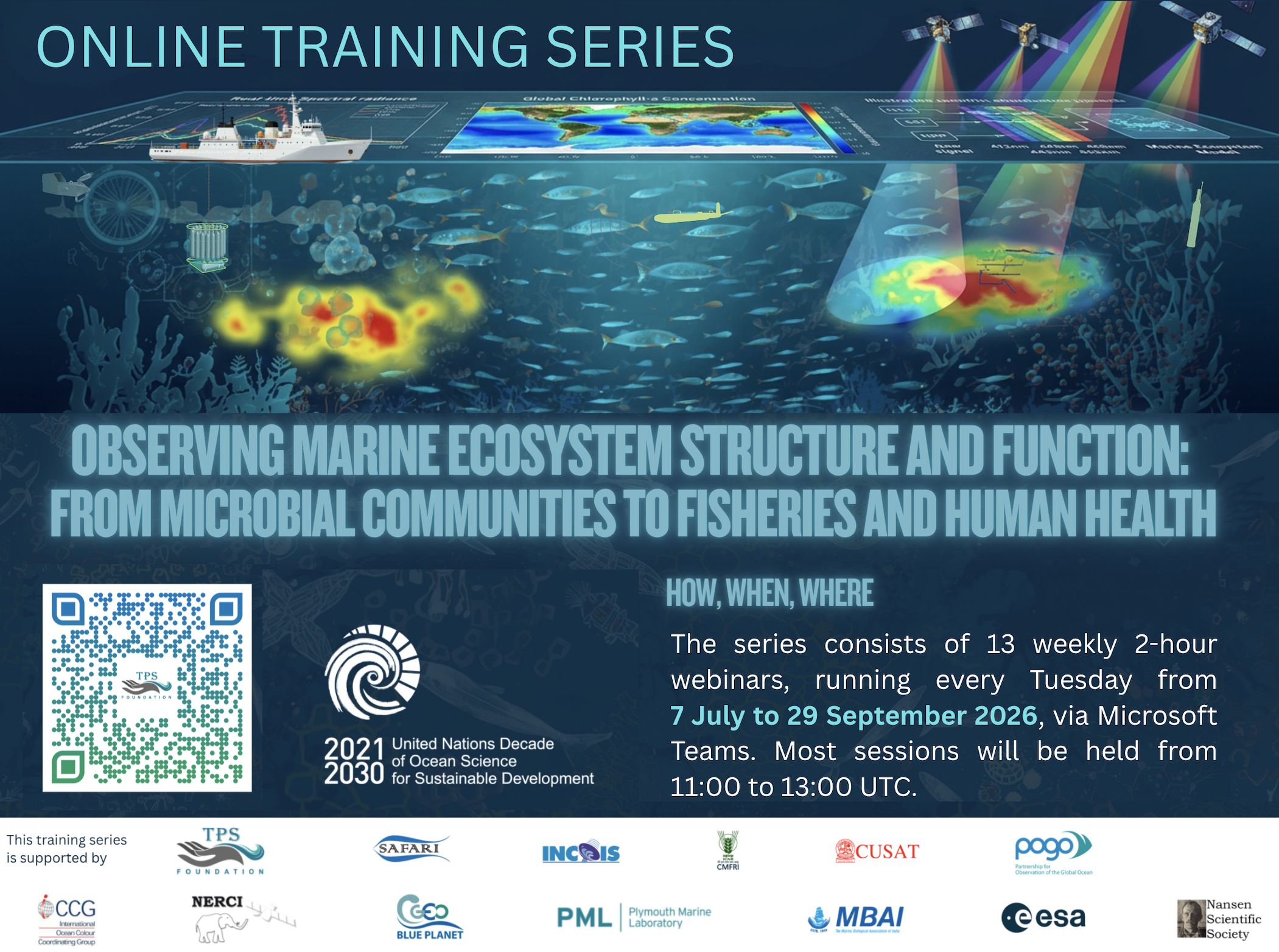
The TREVOR 2026 Symposium Training Series, Observing Marine Ecosystem Structure and Function: From Microbial Communities to Fisheries and Human Health, was a free online training series open to all and held between July and October 2026. An in-person component for select participants was held on 26 October to 3 November 2026 in India, jointly hosted by the Indian National Centre for Ocean Information Services (INCOIS, Hyderabad) and Cochin University of Science and Technology (CUSAT, Kochi).
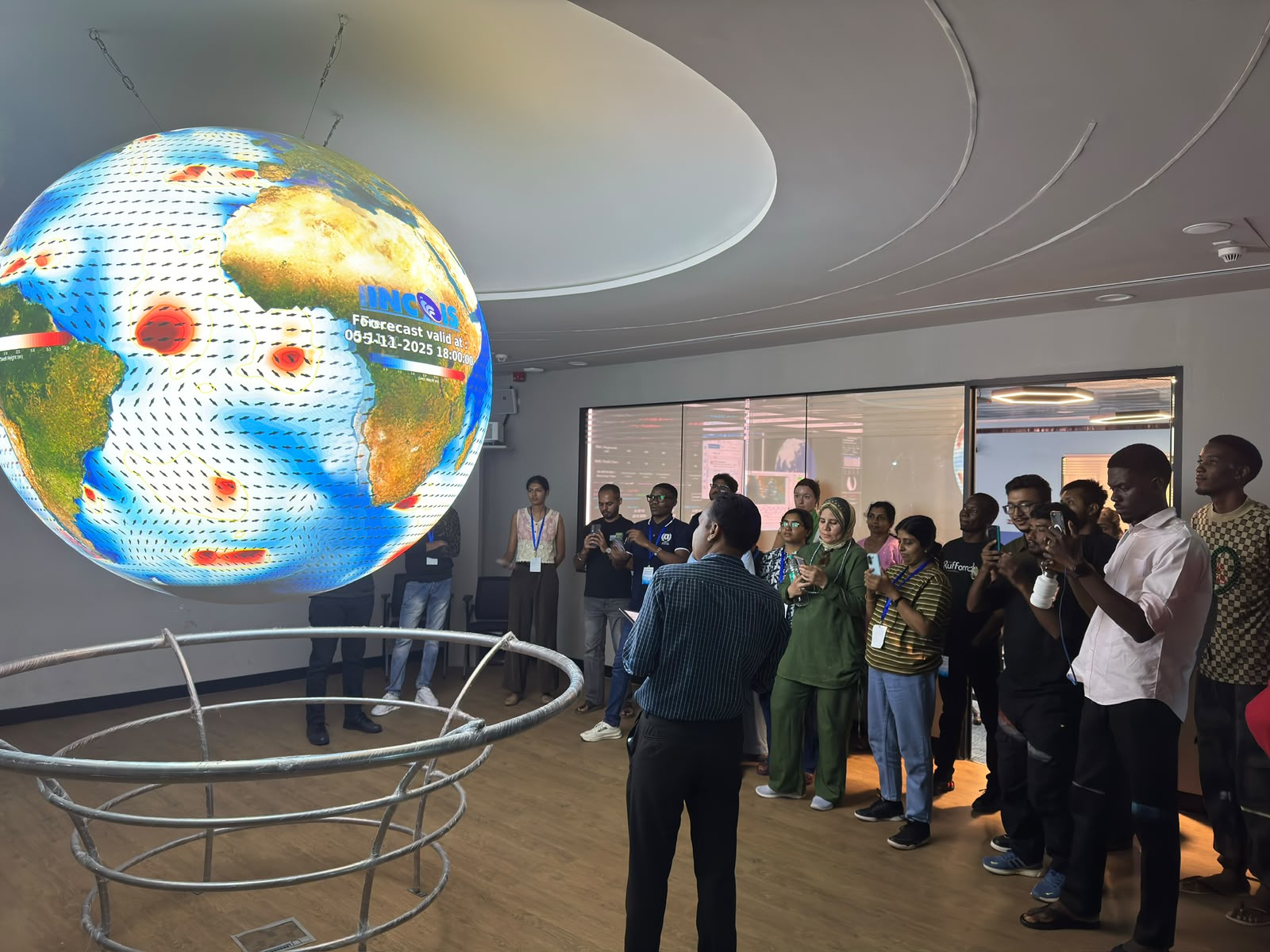
In-person trainees during a tour of the facilities at the Indian National Centre for Ocean Information Services (INCOIS) in Hyderabad, India.
The training brought together expert lecturers and panelists from around the world to explore the observation of marine ecosystems across biological scales, from microbial communities to fisheries and human health. Each weekly session in the virtual component comprised a 1-hour lecture followed by a 1-hour Q&A with the speaker(s). Recordings of all virtual lectures are now available on the Trevor Platt Science Foundation website.
News from ESA & EUMETSAT
Sentinel-3C Launch and Commissioning
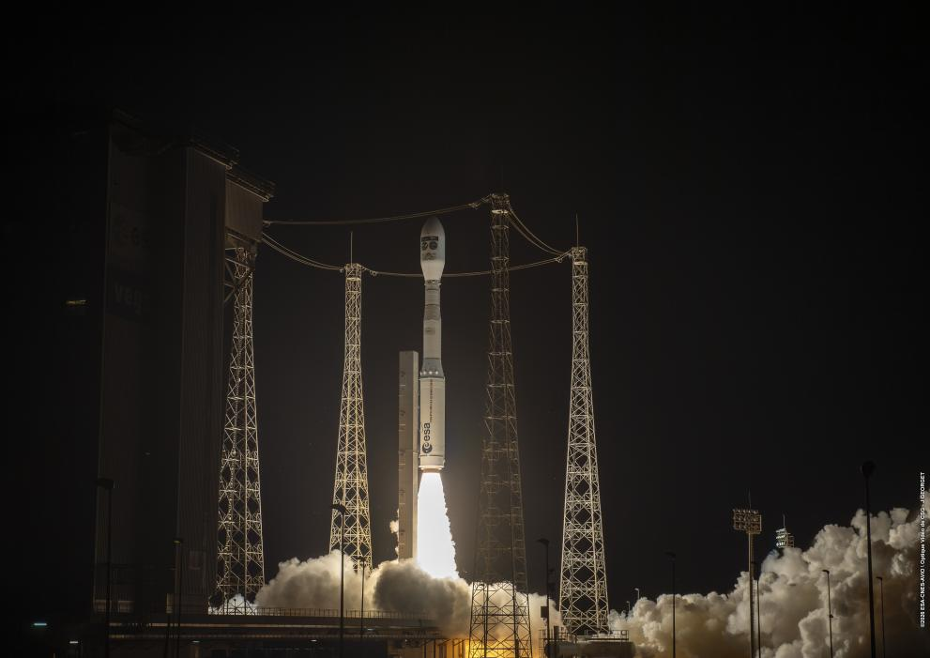 The Sentinel-3C satellite was successfully launched on 15 September 2026 at 03:21 CEST from Kourou, French Guiana, joining the Sentinel-3 constellation as a new addition to the EU Copernicus Programme. The Vega-C launcher delivered the satellite into space very precisely. The Launch and Early Operations Phase (LEOP) was completed by ESA ahead of time, in less than two days! As per plan, the Satellite In-Orbit Verification (SIOV) took about two weeks and went smoothly.
The payload instruments on board Sentinel-3C are OLCI (Ocean and Land Colour Instrument), SLSTR (Sea and Land Surface Temperature Radiometer), SRAL (SAR Radar Altimeter), and MWR (Microwave Radiometer). Although first images from different instruments were published in the few weeks following launch (see ESA and EUMETSAT’s announcements), commissioning the satellite and ground segments will take several months before the mission products reach the required quality. During this period, Sentinel-3C will fly in tandem, first with Sentinel-3B and then with Sentinel-3A, separated from these operational missions by only 30 seconds to allow precise cross-calibration of the instruments.
Full release of the Sentinel-3C mission products is expected by mid-2027. Sentinel-3A, which still performs nominally after more than 10 years in orbit, will be then put in the so-called “TOPO+” configuration. This configuration aims to optimise the benefits brought by the Sentinel-3A mission, while simultaneously reducing operational costs compared to continuing full mission operations. Therefore, the payload data will be downlinked to the ground less frequently than once per orbit. The SRAL and MWR instruments will be kept functional, while a two-camera OLCI subset will be used to fill the daily equatorial gaps that exist in a two-satellite constellation. The SLSTR instrument will be put in hot standby.
News from ISRO
New Coastal Observation Research Laboratory (NICES-CORAL)
The National Information System for Climate and Environment Studies (NICES) programme of the National Remote Sensing Centre (NRSC), ISRO, in collaboration with the Centre for Studies on Bay of Bengal (CSBOB), Andhra University have established the NICES-CORAL (Coastal Observation Research Laboratory) at Visakhapatnam.
The lab is envisioned as a facility for sustained coastal climate observations, and became fully operational in June 2026, marking a significant milestone in strengthening India’s coastal climate observation capabilities. The facility has been equipped with a comprehensive suite of advanced analytical instruments procured under the project that enable high-precision measurements of marine biogeochemical parameters, atmospheric observations, water quality, phytoplankton pigments, dissolved carbon, nutrients, and optical properties essential for integrated coastal monitoring.
Beyond its research objectives, NICES-CORAL is envisioned as a sustainable coastal observational facility supporting long-term climate data, calibration and validation programmes for satellite missions, interdisciplinary research, and capacity building. The observatory will facilitate collaboration among national institutions, provide advanced training for students and researchers, and contribute to the development of science based solutions for coastal resilience, climate adaptation, and sustainable management of marine ecosystems. Visit the website to learn more, or email nices_coral@nrsc.gov.in to discuss collaborations.

Formal inauguration held on 17 July 2026, jointly inaugurated by Dr. Prakash Chauhan, Director, NRSC and Prof. G. P. Raja Sekhar, Hon’ble Vice-Chancellor, Andhra University.
News from KIOST
GK-6 passes national feasibility review: GOCI-III to bring polarimetry to geostationary ocean colour
Korea’s next geostationary environment and ocean satellite, GK-6 (GEO-KOMPSAT 6), passed the national R&D preliminary feasibility study on 25 August 2026. Jointly planned by the Ministry of Oceans and Fisheries (MOF), the Korea AeroSpace Administration (KASA) and the Ministry of Climate, Energy and Environment (MCEE), the mission has a total budget of approximately KRW 770 billion and will be developed over seven years from 2027, with launch targeted for 2033. GK-6 succeeds GK-2B, launched in 2020, and will carry the third-generation Geostationary Ocean Color Imager (GOCI-III) together with the environmental payload GEMS-II. This extends the GOCI record, which began in 2010 with the world’s first geostationary ocean colour sensor, to more than three decades of continuous observation over Northeast Asia.
GOCI-III will be the world’s first and only geostationary polarimetric multispectral payload. Its key specifications include:
- 16 spectral bands from 380 to 1030 nm, including new bands at 650, 762 (oxygen A-band), 780 and 1030 nm
- 5 polarisation channels at 412, 555, 667, 748 and 867 nm (21 channels in total), primarily for atmospheric correction
- 250 m spatial resolution, with hourly observations of Northeast Asian seas (10 times per day) and daily full-disk coverage
- Approximately 30% higher SNR than GOCI-II in the near-infrared bands (748 and 867 nm)
- Simultaneous observation with GEMS-II on the same platform, so its trace-gas and aerosol products can be used directly in ocean colour atmospheric correction
- Night-time light observations from a panchromatic band, a first for the GOCI series
News from NASA
US Decadal Survey for Earth Science and Applications from Space
NASA, through the National Academies, is scheduled to release a new decadal survey, Decadal Survey for Earth Science and Applications from Space 2028-2037 (ESAS 2028), tentatively scheduled to kick off next month. The survey aims to develop a comprehensive strategy (building on the 2018 decadal survey) that “identifies an innovative, fiscally realistic path for addressing the highest priority Earth science and applications challenges that can be advanced in the coming decade through space-based and ancillary observations”. Read more about it at nationalacademies.org/projects/CAST-ASA-26-03.
New Suomi NPP Observations Ceased on 2 November 2026
Delivery of new science data from the Suomi National Polar-orbiting Partnership (Suomi NPP) satellite ceased at 13:00 UTC on 2 November 2026 (2026/306). Users should plan to transition to NOAA-21 and NOAA-20 data products. Read the official announcement here.
PACE Data Reprocessing & Workshop at Fall AGU
PACE’s HARP2 and SPEXone instruments are progressing toward a V5 reprocessing with significantly improved instrument calibration. Forward stream NRT V4 Level-2 and Level-3 products, including RemoTAP and FastMAPOL ocean color, will soon reflect the improved calibration inputs. The full mission Level-2 and Level-3 products will be reprocessed following completion of the Level-1C V5 reprocessing, likely before the end of November.
The PACE team will host a workshop at Fall AGU aimed at providing practical training in accessing, processing, and analyzing data from PACE’s unique instrument suite. The workshop will combine conceptual overviews with practical exercises covering data discovery, access, visualization, and analysis across ocean, atmosphere, and land applications. Additional details can be found here.
Thirsty for more PACE content? See the latest newsletter.
News from SCOR
Applications open for the 2027 SCOR Visiting Scholar
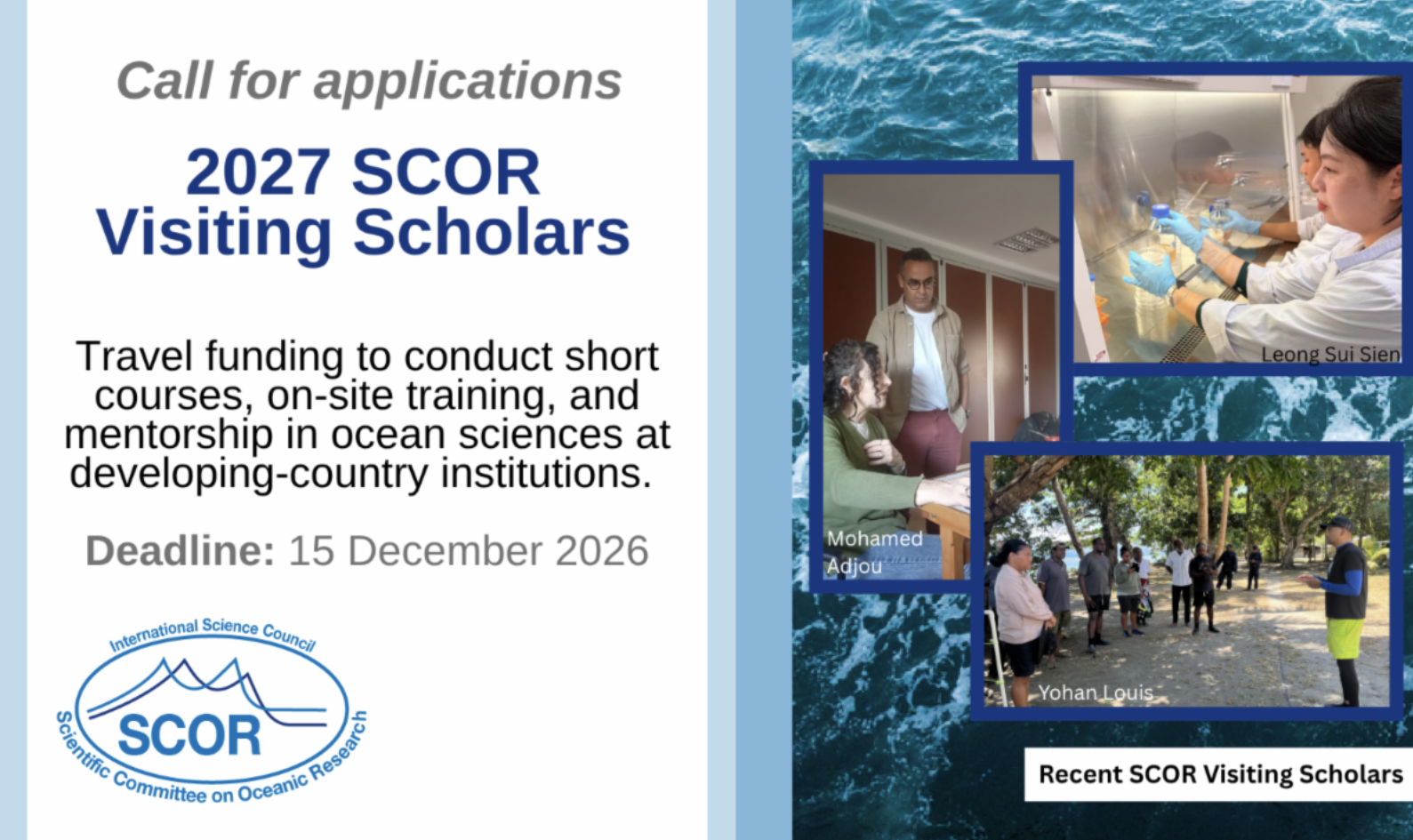 Applications are now being accepted for the 2027 SCOR Visiting Scholar program. The program enlists the services of ocean scientists, from both developed countries and developing countries, to teach short courses and to provide more extended on-site training and mentorship at developing country institutions.
This program is open to any scientists who have time available to spend teaching and mentoring in a developing country for two weeks or more. The $2500 USD scholarships are not intended to conduct joint research, although future new collaborations are a desirable outcome of a visit.
Submit an application by 15 December 2026.
Read about this and other news items in the most recent SCOR newsletter.
Community News
Save the Date! SOOS Symposium 2027
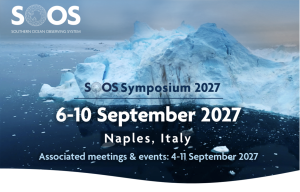 Join the Southern Ocean community for five days of discussion, collaboration and coordination around Southern Ocean science and observations at the 2027 Symposium of the Southern Ocean Observing System (SOOS). The SOOS Symposium 2027 will take place in Naples, Italy, from 6 – 10 September 2027. Associated meetings and events can take place from 4–11 September. Check their website for more information, or join their mailing list for updates.
Webinar Series: Coastal Water Quality Monitoring in the Wider Caribbean Region
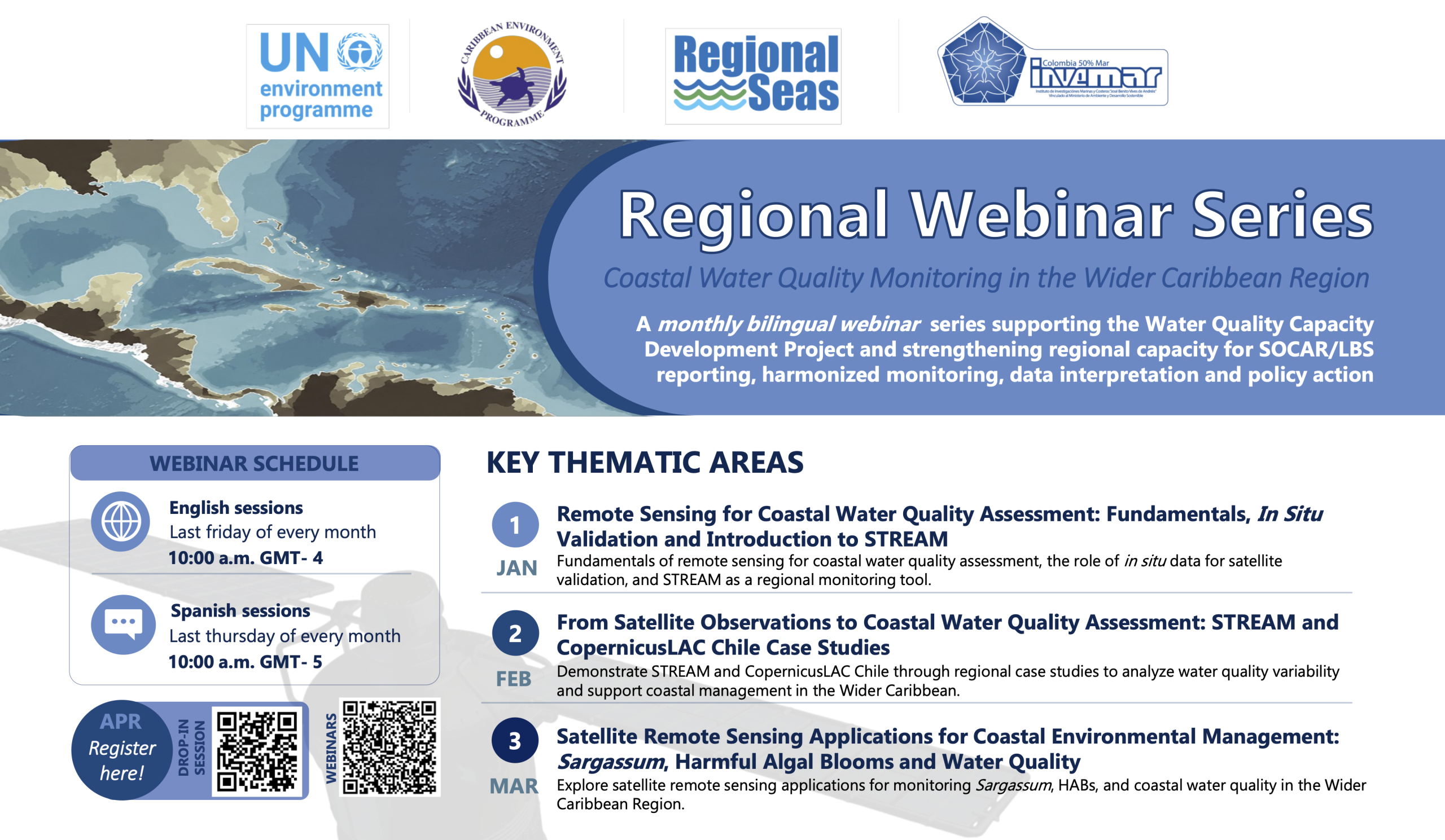 INVEMAR, in collaboration with the United Nations Environment Programme (UNEP) Cartagena Convention Secretariat, is coordinating a monthly bilingual webinar series on Coastal Water Quality Monitoring in the Wider Caribbean Region, as part of the Water Quality Capacity Development Project, implemented by UNEP and funded by the US Environmental Protection Agency (EPA). The webinar brings together scientists, technical professionals, and environmental institutions across the region to share knowledge, explore monitoring approaches, and strengthen regional capacities in coastal water quality assessment.
Three webinars dedicated to aquatic remote sensing will begin in 2027, followed by a drop-in session in April.
- January – Remote Sensing for Coastal Water Quality Assessment: Fundamentals, In Situ Validation and Introduction to STREAM.
- February – From Satellite Observations to Coastal Water Quality Assessment: STREAM and CopernicusLAC Chile Case Studies.
- March – Satellite Remote Sensing Applications for Coastal Environmental Management: Sargassum, Harmful Algal Blooms and Water Quality.
- April – Drop-in Session. An opportunity for participants to ask questions, exchange experiences, and interact with experts.
All webinars will be offered in both English and Spanish, generally on the last Friday (English) and Thursday (Spanish) of each month. See fliers for details and easy sharing.
Register here for the webinar series and register here for the drop-in session.
Additional webinars will occur throughout 2027 focusing on other aspects of coastal and marine water quality monitoring. Contact María José Nariño for questions or to express interest in being involved in the webinar series.
Upcoming Events
Check for upcoming workshops & conferences, or training events on the IOCCG website.
Xiamen Symposium on Marine Environmental Sciences (XMAS 2027)
The Xiamen Symposium on Marine Environmental Sciences (XMAS 2027) under the theme transformative science and technology for a resilient and sustainable ocean will be held on 12-15 January 2027, in Xiamen, China organized by the State Key Laboratory of Marine Environmental Science (MEL), Xiamen University, and the Department of Earth Sciences, National Natural Science Foundation of China (NSFC). Many sessions are relevant to integrated ocean observing or the application of ocean colour radiometry, including a session on advancing climate data records: creation and application of long-term ocean colour products, and on tipping points in marine ecosystems. IOCCG Chair, Dr. Shubha Sathyendranath, is a keynote speaker at the event.
Employment Opportunities
Check for new research and employment opportunities on the IOCCG website: ioccg.org/resources/employment-opportunities.
- Postdoctoral Scholar Position: Lidar Remote Sensing of Marine Plankton, College of Agricultural Sciences – Department of Botany and Plant Pathology, Oregon State University, Corvallis, Oregon, USA. Deadline November 15
- Postdoctoral Position in Lidar Applications to Ocean Colour, Laboratory of Oceanology and Geosciences (Wimereux, France) OPEN until Filled
If you would like to include a position on the webpage, please contact Raisha Lovindeer.

 The 6th International Ocean Colour Science (IOCS) meeting was held in Darmstadt, Germany from 1 – 4 December 2025, hosted by EUMETSAT and ESA. All meeting material is available is on the archive webpage.