IOCCG news bulletins include items of interest from the IOCCG, its sponsoring agencies, and the broader ocean colour community. Please let us know if there are any items of interest you would like to see in the next IOCCG news bulletin by contacting Raisha Lovindeer (raisha@ioccg.org). IOCCG is now on Bluesky! Check it out or follow us for more frequent updates.
News from IOCCG
IOCCG-30 Committee Meeting
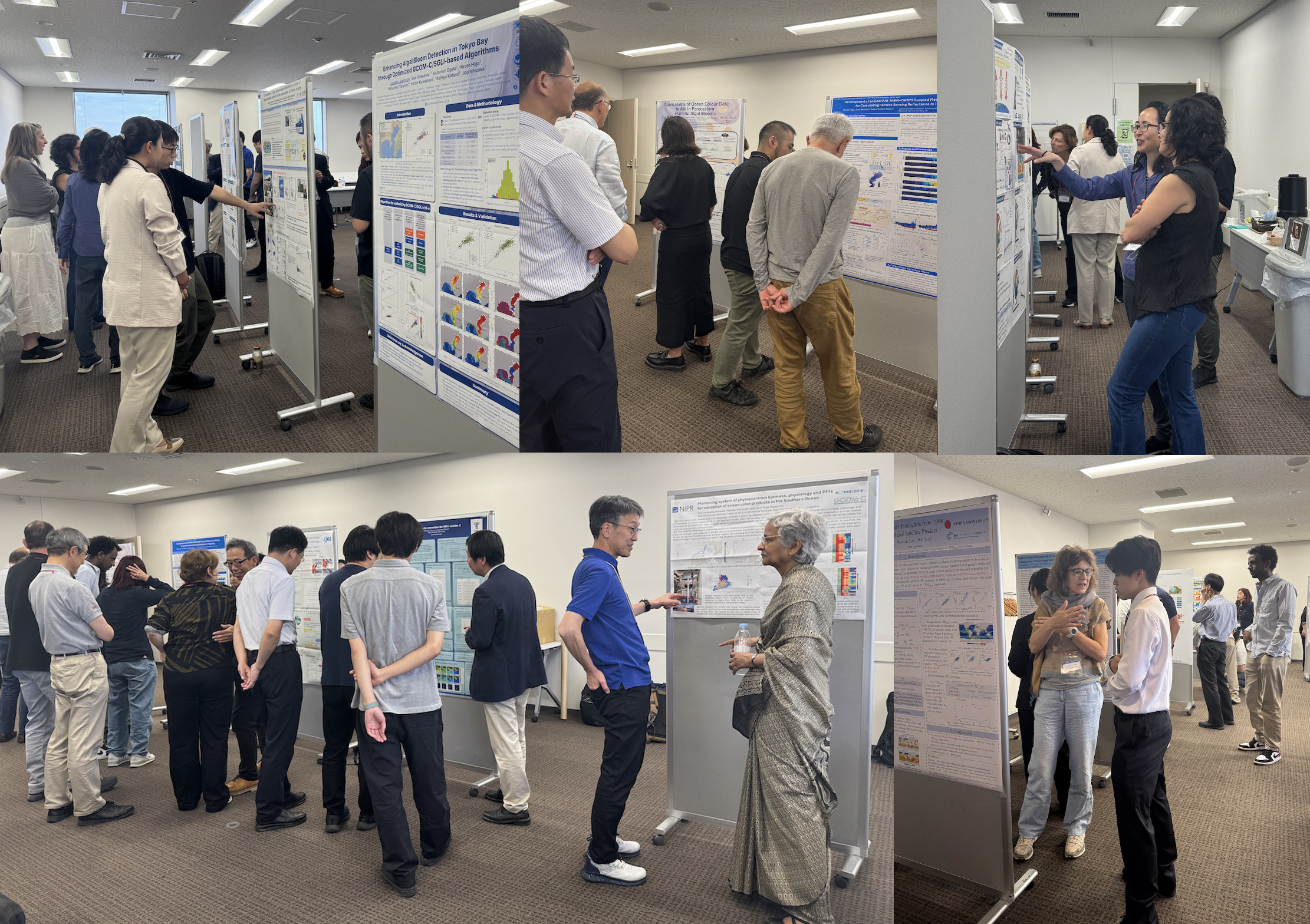 The 30th IOCCG Committee meeting took place in Tokyo, Japan from 19-21 May 2026, and was graciously hosted by JAXA. The Committee reviewed the status of the four current IOCCG working groups, six IOCCG task forces, and four pending IOCCG protocols. One working group (on Conducting Benthic Reflectance Measurements) is making final changes to their report after peer-review and will have a completed report by the end of 2026. Other items discussed at the meeting included upcoming ocean colour mission challenges and opportunities; recommendations, actions, and suggested synergies emerging from the International Ocean Colour Science meeting; and IOCCG’s training and outreach initiatives. The next IOCCG Committee meeting is scheduled to take place online in March 2027.
As part of IOCCG-30, JAXA and IOCCG organized a half-day science sharing session for scientists from the local ocean-colour community in Japan with members of the IOCCG Committee. Scientists presented posters on a range of topics from satellite calibration and validation, to societal applications of ocean colour data and products. Presenters included many early-career scientists.
IOCCG Committee Member Rotations
As an Affiliate Program of SCOR, IOCCG is required to implement a regular rotation of scientific committee members. Accordingly, Aurea Ciotti (Universidade de São Paulo), Chuanmin Hu (University of South Florida), and Wonkook Kim (Pusan National University) rotated off the IOCCG Committee. New scientific committee members added were Lino Sander (University of Rio de Janeiro), Marié Smith (Council for Scientific and Industrial Research), Brian Barnes (USF), and Jae-Hyun Ahn (KIOST). We thank all outgoing members for their hard work and contributions over the past few years, and extend a warm welcome to all our new IOCCG Committee members.
Recap: IOCCG Summer Lecture Series 2026
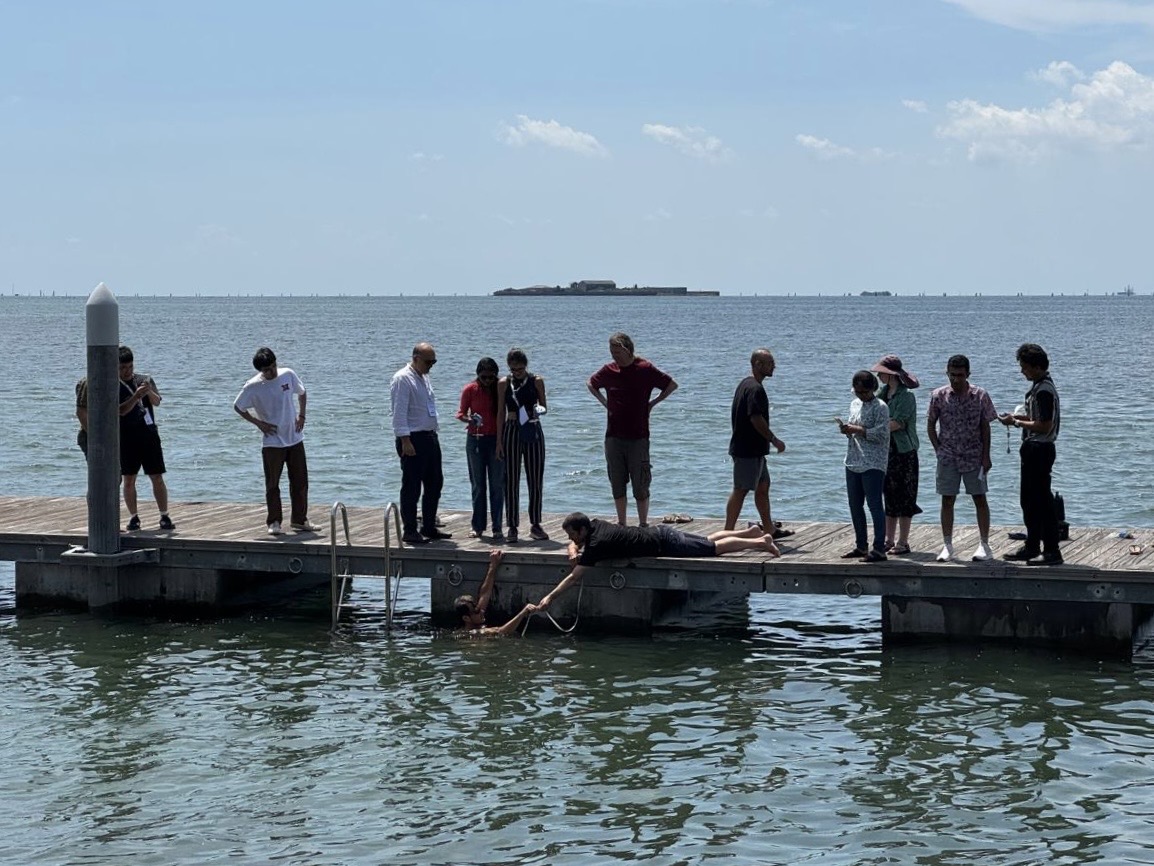
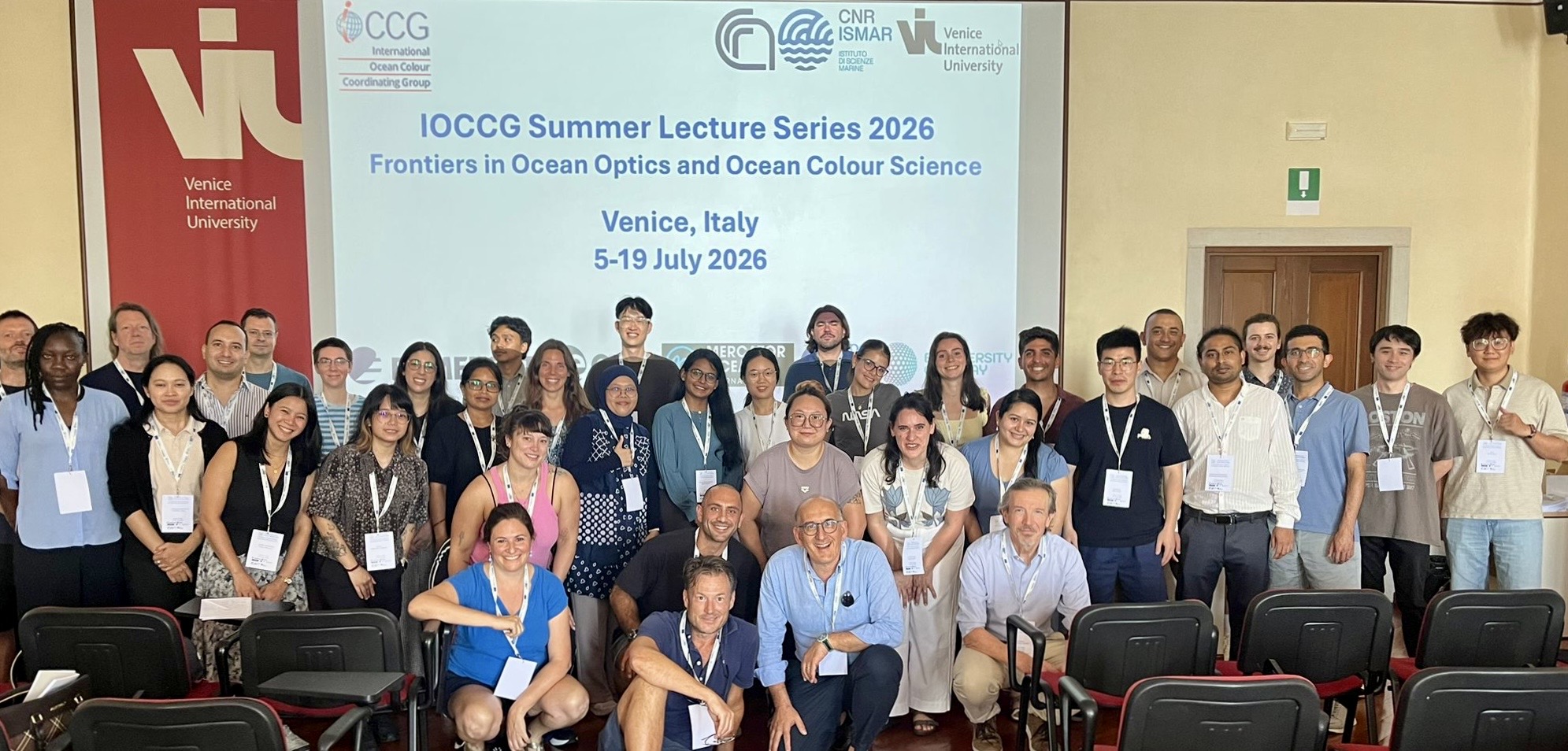 The 7th edition of the IOCCG Summer Lecture Series took place on 5 – 19 July 2026, hosted by the Institute of Marine Sciences (ISMAR) from the Italian National Council of Research (CNR) and the Venice International University (VIU) at the VIU campus on the island of San Servolo, Venice, Italy. This intensive 2-week training was attended by 30 students from 19 countries which were selected from a pool of 115 applications. They spent time in dedicated lectures and discussions, exploring the optics of the Venetian Lagoon, and manipulating satellite data and software.
 IOCCG wishes to thank all the SLS sponsors for the funding to make the course happen and to assist with travel for the participants, the dedicated lecturers who volunteered their time to the training of the next generation of ocean-colour scientists, the IOCCG SLS Coordinators Drs. Laura Zoffoli and Vittorio Brando who led the organization of the event, and the participants for their wonderful engagement and curiosity throughout the course. All participants are listed on the SLS-2026 webpage, and course material will be available there.
Weekly Online Training Series until 29 September
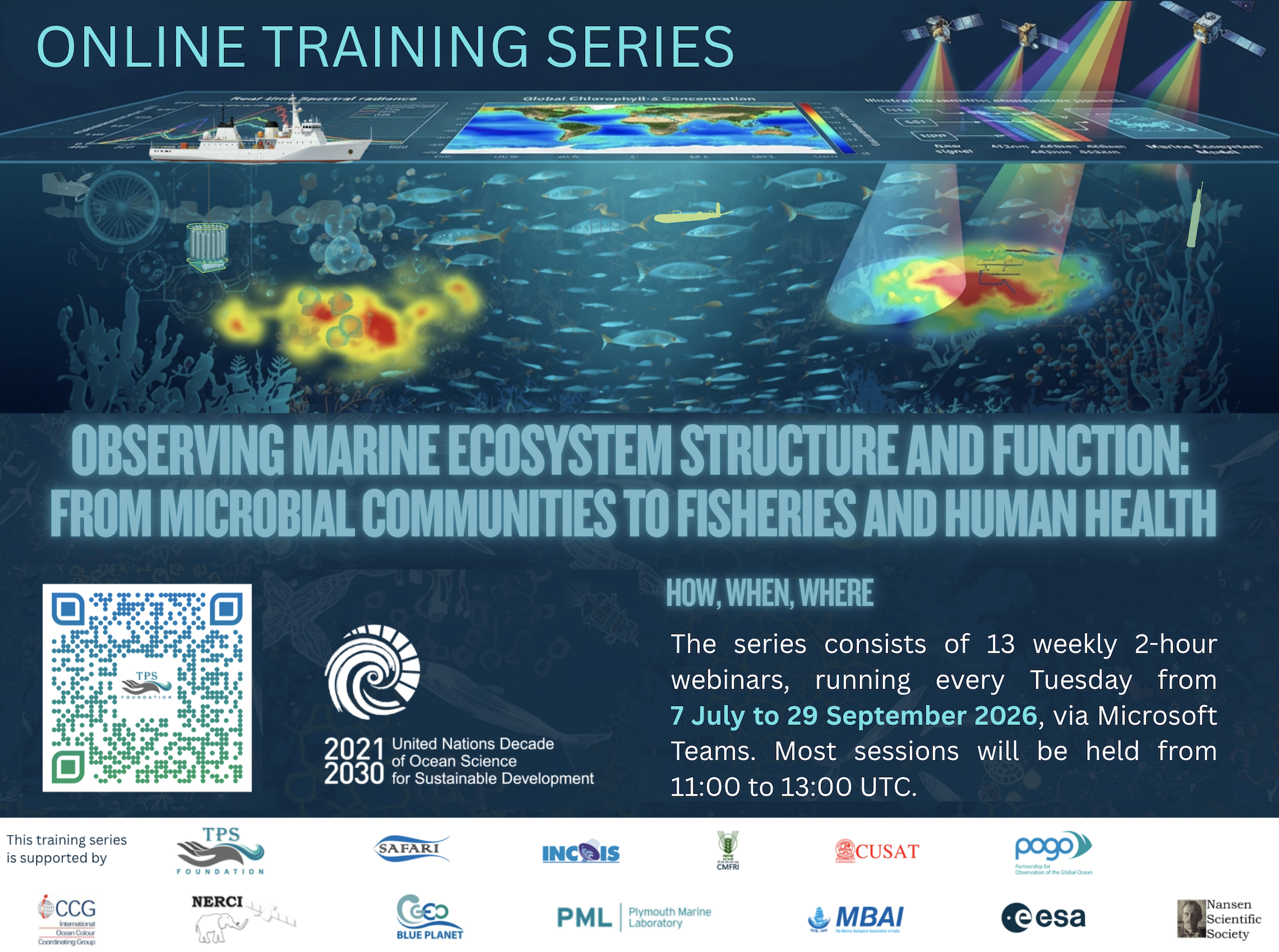 The TREVOR 2026 Symposium Training Series Observing Marine Ecosystem Structure and Function: From Microbial Communities to Fisheries and Human Health is a free online training series bringing together expert lecturers and panellists from around the world to explore the observation of marine ecosystems across biological scales, from microbial communities to fisheries and human health. The series consists of 13 weekly 2-hour webinars, running every Tuesday from 7 July to 29 September 2026, via Microsoft Teams. Most sessions will be held from 11:00 to 13:00 UTC, with the exception of the fisheries and aquaculture session, which will run from 13:00 to 15:00 UTC. Each session comprises a 1-hour lecture followed by a 1-hour Q&A with the speaker(s). All are welcome to join. Further Information and registration links available at https://trevorfoundation.org/symposium/#onlinetraining
Applications open for the 2027 IOCCG Platt Scholarship on 12 August
Applications for the 2027 IOCCG Platt Scholarship will be open from 12 August – 12 November 2026. The scholarship offers the opportunity to developing country nationals to conduct hands-on research, OR receive in-depth training, at a foreign institution or training course. Applicants are required to have already identified a 2027 training course OR an institutional host for their research exchange prior to making an application. Potential hosts are encouraged to share this opportunity with eligible scholars (citizens of these eligible countries, who are residing in their country at the time of application). Check the scholarship page for details.
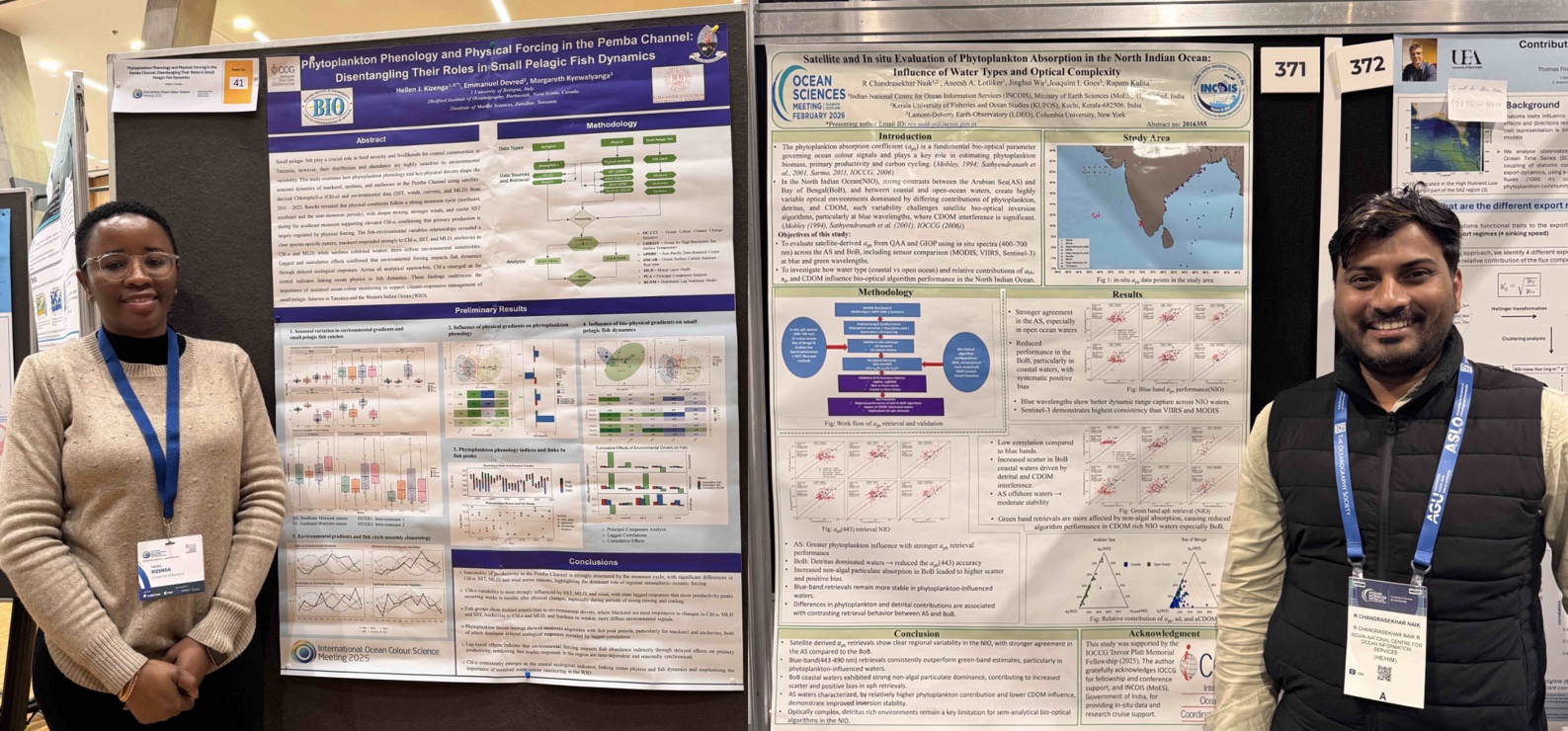
2024 Platt Scholar Hellen Kizenga (left) presenting her scholarship-related research at the 2025 International Ocean Colour Science Meeting in Darmstadt, Germany; and 2025 Platt Scholar R Chandra Sekhar Naik (right) presenting his scholarship-related research at the 2026 Ocean Sciences Meeting in Glasgow, Scotland. Earlier this year, Naik published his research in the Journal of Remote Sensing [doi.org/10.3390/rs18101451]
News from ESA & EUMETSAT
Sentinel-3C launch coming soon!
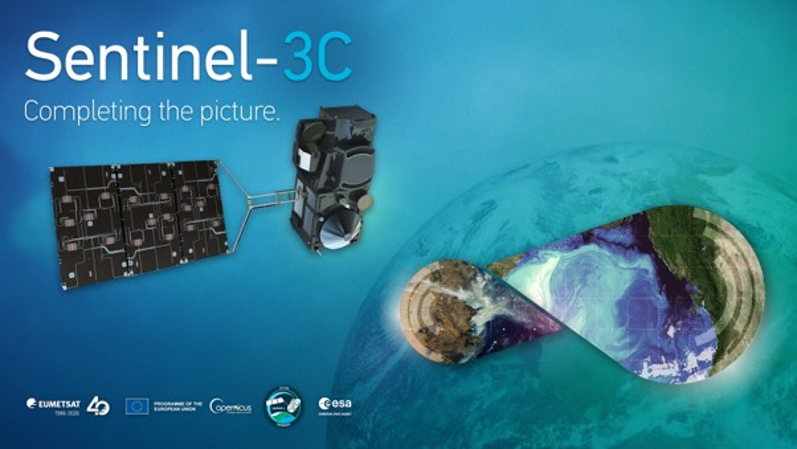 The Sentinel-3C launch date has now been confirmed: 15 September at 03:21 CEST (14 September at 22:21 PM Kourou time), on a Vega-C launcher. The launcher, like its predecessor, is specifically designed to launch small satellites for scientific and Earth observation missions to polar and sun-synchronous low Earth orbits.
Avio, the prime contractor for the Vega programme, shared the news recently in a press release, which you can read here.
Both EUMETSAT and ESA launch pages are now live and contain information about the satellite and its mission, an interactive Sentinel-3C model, a timeline of the satellite’s journey and more!
News from EUMETSAT
Copernicus FRM4SOC-2 Opportunities
A third call is open for applications for those seeking free calibrations of your own radiometer platforms and free short-term radiometric system rentals – this time the offer includes shipping and customs . All groups conducting in situ OC radiometry worldwide are encouraged to apply. The offer includes a dedicated 1.5 day online training on radiometry and FRM principles, measurement procedures/protocols, and usage of the HyperCP above-water radiometry processor and the ThoMaS satellite-to-field match-up toolkit.
Update to Sentinel-3 OLCI level 2 Water processing
The processing baseline for Level 2 water products from Copernicus Sentinel-3 OLCI has been updated to Collection-4 on 26 February and on 30 June 2026 with v4.00 and v4.01, respectively. Collection-4 is bringing significant changes to the water products, including the switch to BRDF-corrected Rrs, see EUMETSAT’s user announcement.
The EUMETSAT Data Store temporarily contains a mixture of Collection-3 and Collection-4 data until the full mission reprocessing completes in Q3 2026.
News from SOA & EUMETSAT
NSOAS and EUMETSAT Renew MoU, Expand Ocean Color Data Exchange
On July 2, 2026, the National Satellite Ocean Application Service (NSOAS) of the Ministry of Natural Resources of the People’s Republic of China and the EUMETSAT officially signed a Memorandum of Understanding (MoU) on cooperation in ocean satellite data applications and exchange. Since the initial signing in 2012, both sides have carried out operational exchanges of data from the Metop and Jason series as well as China’s ocean satellite series, while conducting in-depth collaboration in areas such as data reception, processing, and application research.
Marking the 40th anniversary of EUMETSAT, the two parties have renewed the MoU, extending their data exchange into the field of ocean colour satellites. Ocean colour and sea surface temperature data products from the COCTS (Chinese Ocean Color and Temperature Scanner) onboard China’s HY-1C, HY-1D, and HY-1E satellites will be distributed to EUMETSAT and its Member States through this data exchange mechanism, jointly promoting the wider application of China’s ocean colour satellite observations.
News from ISRO
Oceansat-3 Data Available
The Indian Space Research Organization (ISRO) successfully launched the Oceansat-3/EOS-06 mission on 26 November 2022. Oceansat-3 is part of ISRO’s Oceansat program and is envisaged to provide data continuity for the operational users of Ocean Color Monitor (OCM) data from Oceansat 2 with improvements to enhance operational services like Potential Fishing Zone (PFZ) advisories and primary productivity estimations. The continuity of the retrieval of ocean surface wind vector data is also made available through a scatterometer on the same platform. Oceansat-3 is configured to cover the global oceans and the mission, in tandem with Oceansat-2, improves the repeat time of ocean colour measurements to every 2 days and wind vector measurements to every 12 hours. The following instruments are on board: A 13-band Ocean Colour Monitor (OCM3) in VNIR region(400-1100 nm range) for ocean colour monitoring and A Ku-Band Pencil beam scatterometer for continuity of ocean surface wind vector data for cyclone warning and assimilation to numerical weather prediction models (continuation of OSCAT-2 mission). OCM3 has a 1440 km swath, with 360 m spatial resolution over the oceans adjacent to the Indian mainland (LAC) and 1 km spatial resolution for the global ocean (GAC). Compared to Oceansat 2 OCM, spectral bandwidth has been narrowed from 20–40 nm to 8–20 nm to facilitate improved spectral classification, and the targeted SNR for ocean reference radiances has been elevated from 300 to greater than 800. The equator crossing time for the satellite is approximately 12:00 PM local solar time for the descending node. All Oceansat-3 operational products are freely available from the Bhoonidhi, ISRO’s EO data hub (https://bhoonidhi.nrsc.gov.in). Also daily, 8-day and monthly Level-3 global gridded products from OCM at a spatial resolution of ~4 km are made available through Bhuvan geoportal of NRSC, Hyderabad under NICES-Ocean.
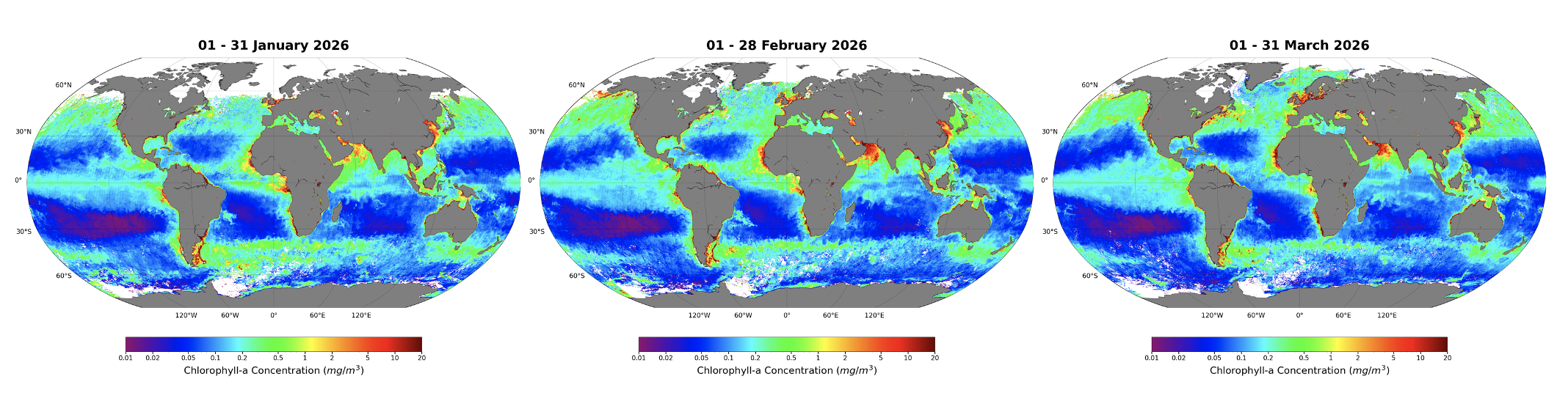
Examples of Global Level-3 Monthly Chlorophyll-a Concentration from EOS-06 OCM3, showing an intense winter bloom over the northern Arabian Sea (Feb & Mar 2026), an algal bloom off the coast of Argentina in the southern Atlantic Ocean (Jan & Feb 2026), and the extreme “ocean desert” in the South Pacific Gyre.
News from NASA
NISAR L-band provisional data has been released
Calibrated L-band data from the NASA-ISRO Synthetic Aperture Radar (NISAR) mission are now available through the Alaska Satellite Facility Distributed Active Archive Center (ASF DAAC) and NASA Earthdata. The initial public release, which began on 20 July 2026, includes observations acquired on or after 17 June 2026.
New acquisitions will be added as they are processed, providing researchers with an expanding record of Earth’s changing surface. Earlier observations collected during NISAR’s first year of science operations will continue to be added over the coming months, with the complete science record expected to be available by the end of 2026. S-band data are also available through https://bhoonidhi.nrsc.gov.in/bhoonidhi/index.html
Additional information on the NISAR mission and the applicability of its data products can be found in https://www.earthdata.nasa.gov/news/nisar-l-band-data-released-expanding-record-surface-changes
New ROSES 2025 amendments for NASA’s Earth Science Division science and applications
On 20 July 2026, NASA released new Research Opportunities in Space and Earth Sciences (ROSES) 2025 amendments for different elements that would support NASA’s Earth Science Division science and applications. More information on amendments to the NASA Research Announcement (NNH25ZDA001N) can be found on the NASA research opportunity homepage at https://solicitation.nasaprs.com/ROSES2025 and will appear on SARA’s ROSES blog at: https://science.nasa.gov/researchers/solicitations/roses-2025/
News from CONAE
10th Gulich Institute and the IEEE Geoscience and Remote Sensing Society (IEEE-GRSS) Spring School Training held September 21-25, 2026, in Córdoba, Argentina
Intensive training is planned in one of the main environmental challenges of today: the degradation of water quality in anthropized basins, and the increase in eutrophication processes. This Spring School Training event is co-organized with CONAE’s SABIA-Mar Mission, GEO AquaWatch, CONICET, the National University of Córdoba, the OASIS project and the Córdoba Province Watershed Authority. The course is accessible for Spanish and English speakers.
Over the course of five days, national and international experts will share knowledge and experience regarding satellite monitoring, water body remediation, and environmental management, integrating tools such as optical remote sensing, data analysis, fieldwork, and the discussion of real-world case studies. The program includes theoretical lectures, practical workshops, laboratory activities, and measurement campaigns at the San Roque Reservoir, alongside opportunities for exchange among researchers, professionals, and water resource management agencies. Both in-person and virtual participation is possible.
The School is aimed at Master’s and doctoral students; researchers; professionals in the space and environmental sector; specialists in environmental engineering, biology, chemistry, limnology and geosciences; technical staff of water management agencies; and those responsible for decision-making in environmental policies.
GEO AquaWatch is excited to co-sponsor the training alongside many other partners, and will provide a session co-developed with the World Water Quality Alliance’s Earth Observation Workstream on the role of international organisations in water management policy, and ensuring water framework directives are followed regionally and nationally. An interactive user engagement session will involve role-playing and requirements-gathering. All of these can be attended in-person as well as virtually
See the website for details and register as soon as possible. Registration will remain open until 14 August 2026 or until maximum capacity is reached, whichever is first.
Community News
GEO AquaWatch Early Career Society 2027 Call for Water Talks
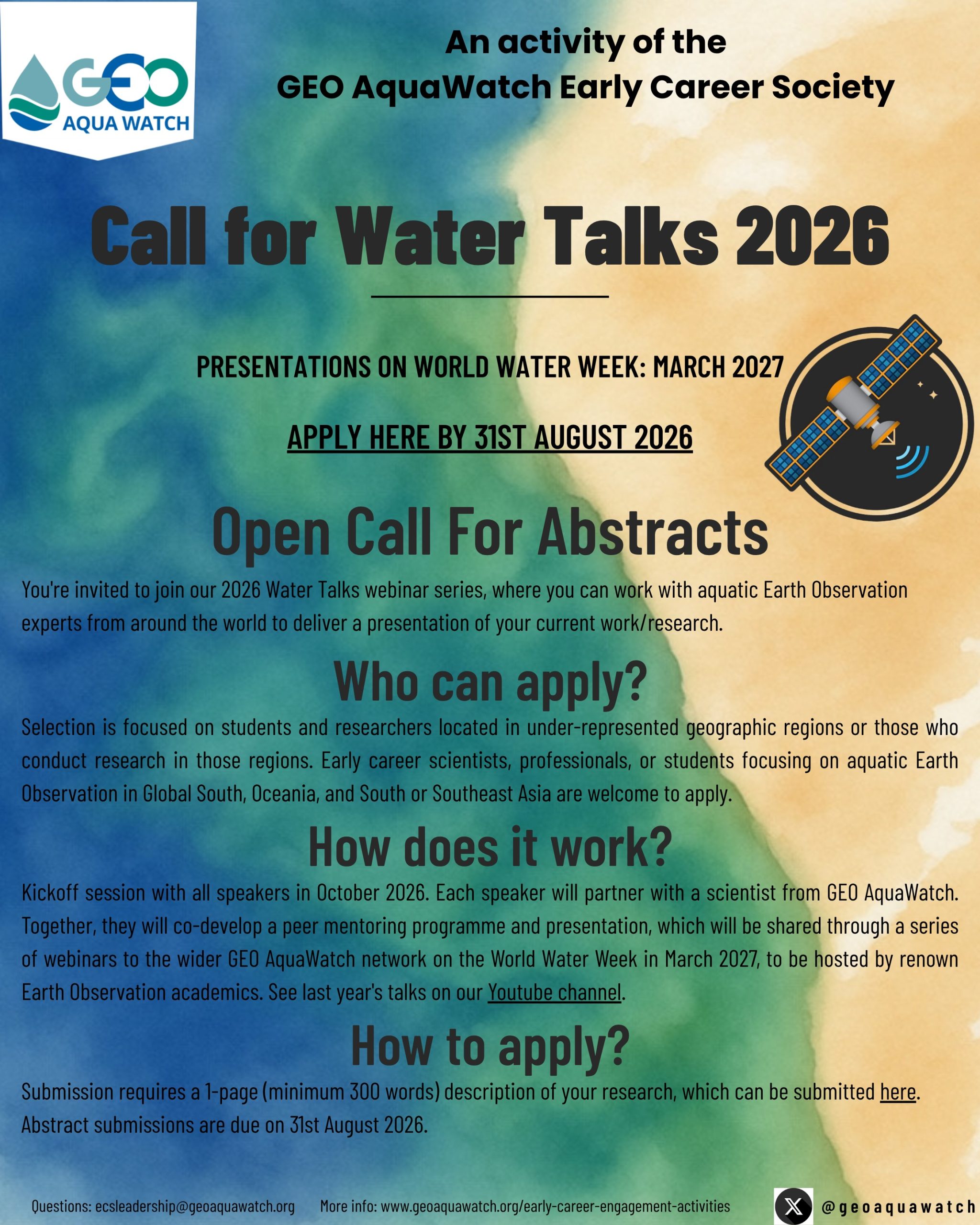 GEO AquaWatch Early Career Society announces the 2027 Call for Water Talks. The deadline to apply is 31 August 2026. Organized by the GEO AquaWatch Early Career Society, the GEO AquaWatch Water Talks is a series of webinars to share experiences and knowledge about water remote sensing research and application from early career scientists. This is its 4th successful year!
The program is designed to support early career scientists from underrepresented groups, and provide mentoring on communication skills by volunteers of the Early Career Society and senior researchers. Participation in the Water Talks provides an excellent opportunity to build a professional network and to bring your research to a wider audience. Early career scientists (especially those from the Global South) with aquatic remote sensing research projects nearing or at completion of analysis, are invited to submit abstracts of their work in English, Spanish or Portuguese for possible selection as a 2027 Water Talk. Please submit your abstract here by UTC 11:59 PM on 31 August 2026.
Upcoming Events
Check for upcoming workshops & conferences, or training events on the IOCCG website.
Ocean Optics XXVII, Ghent, Belgium

Registration remains open for the 27th edition of the Ocean Optics conference (OO XXVII), being held in Ghent, Belgium on 13-18 September 2026. The conference brings together scientists, managers, and policy professionals from across the globe with a shared passion for optics in aquatic environments. Over 350 people have registered so far. Visit the OO XXVII website for more information at oceanopticsconference.org.
TREVOR-SAFARI 2026, Kochi, India
Registration is open for TREVOR-SAFARI 2026, jointly organized by the Trevor Platt Science Foundation (TPSF) and the Societal Applications in Fisheries and Aquaculture using Remote Sensing Imagery (SAFARI). TREVOR-SAFARI 2026 will take place from 4-6 November 2026 at ICAR-Central Marine Fisheries Research Institute (ICAR-CMFRI) in Kochi, India, hosted by the Chemical Oceanography Division of the Cochin University of Science and Technology (COD-CUSAT), Kochi, Kerala, India.
The theme of the symposium is Aquatic ecosystems, including fisheries, in a changing world: Global context and tropical perspectives. The deadline for international participants to register is 30 September 2026. Other important dates and details regarding the symposium are available on the symposium website at trevorfoundation.org/symposium.
Employment Opportunities
Check for new research and employment opportunities on the IOCCG website: ioccg.org/resources/employment-opportunities.
- Postdoctoral Position in Lidar Applications to Ocean Colour, Laboratory of Oceanology and Geosciences (Wimereux, France) OPEN until Filled
If you would like to include a position on the webpage, please contact Raisha Lovindeer.

 The 6th International Ocean Colour Science (IOCS) meeting was held in Darmstadt, Germany from 1 – 4 December 2025, hosted by EUMETSAT and ESA. All meeting material is available is on the archive webpage.